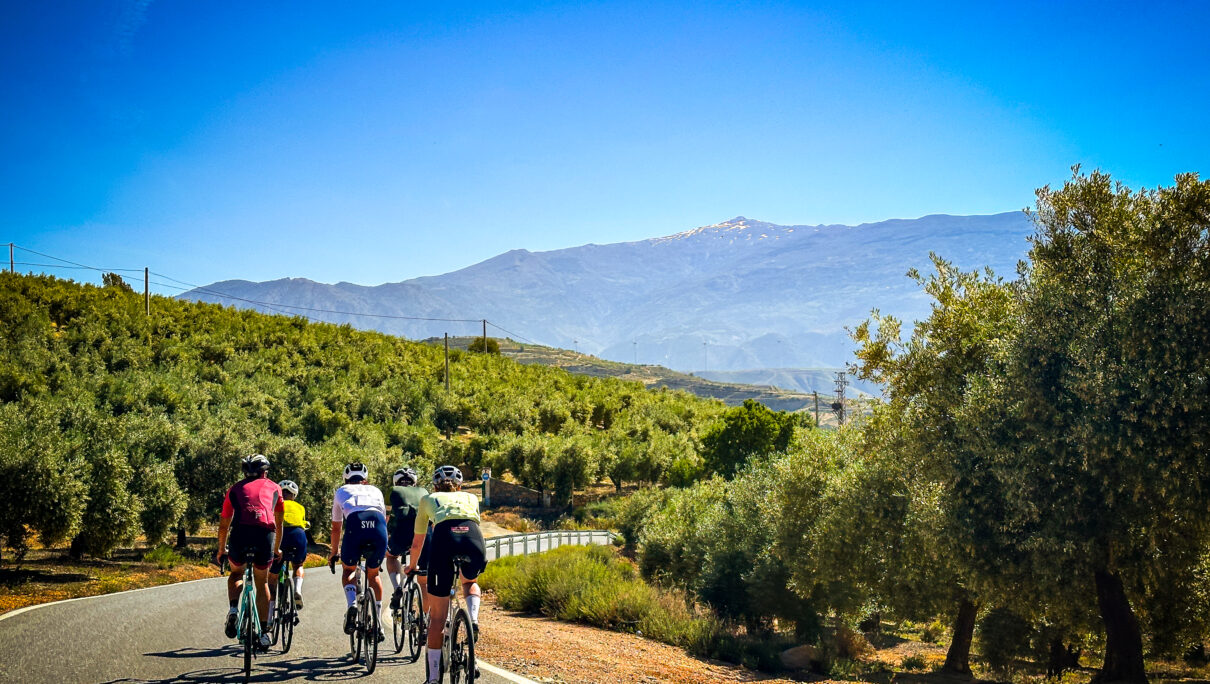
Cycle tourism is long since no longer a niche. Destinations are investing in cycling infrastructure, routes, bike-friendly accommodation, events and campaigns. And rightly so. Cyclists are attractive visitors: they often stay for several days, spend money locally and make it possible to make lesser-known areas and the low season more appealing too.
But there is a problem.
Good cycling facilities do not automatically make a good cycling destination.
And a page entitled ‘Cycling’ putting it on your tourist website does not automatically ensure that cyclists come to your destination.
Therefore, the main question is not:
How do we promote our cycling?
The better question is:
Why would a cyclist choose us?
That difference changes everything.
Cycle tourism starts with positioning
A destination does not have to be the best cycling destination in Europe.
She above all needs to be the right destination for a specific cyclist.
Think of destinations that already have a clear place in the minds of cyclists:
- Girona
- Majorca
- Dolomites
- Flanders
- Alpen
You hardly need to explain why you would want to cycle there. The destination already has a meaning. That is precisely the challenge for destinations that do not yet have a strong position.
The answer is not automatically more content anymore. The answer is to ‘load’ the destination’. Why do you want to go there?
What makes your destination stand out?
- Is it the quiet roads?
- The climbs?
- Gravel?
- The countryside?
- The food?
- The cycling culture?
- The accessibility?
- Combining cycling with another experience?
“Beautiful nature and excellent cycle routes” is not a positioning. Almost any destination can say that.
A good starting point is:
For [specific cyclist], [destination] is the place to experience [specific cycling experience], because [evidence].
The more specific you make that, the stronger your story becomes.
Because positioning is not about telling everything you have.
Positioning is about choosing what you want to be known for.
Stop marketing to ‘cyclists’
One of the biggest problems within cycle tourism is the idea that there is one large target audience that the cyclist hot.
That doesn't exist.
A 28-year-old adventure-seeking gravel rider has different needs to a 55-year-old road cyclist who wants to spend a week in the mountains with friends.
A family is looking for something else again.
And an e-bike user may have a completely different definition of a good cycling destination.
So before you start a new campaign, ask yourself:
Who exactly are we looking to attract?
No: cyclists.
But for example:
- cyclists
- gravel riders
- endurance cyclists
- cycling clubs
- women travelling together
- cyclists who combine cycling with gastronomy
- families
- bikepackers
- event participants
- e-bike users
The more specific your target audience, the more relevant your routes, content and message can become.
And ultimately, your destination becomes more recognisable as a result.
Your cycling routes are your product
Many destinations treat cycle routes as an optional extra on their tourism website. They shouldn't do that.
For a cycling destination, the route is a product.
A cyclist does not wake up with the thought: “I’d love to consume some Destination Marketing today”
She thinks:
“Where am I cycling tomorrow?”
It is also about making routes clearly accessible: they must be easy to find, understand and use.
A good directions page directly answers questions like:
- How long is the route?
- How many metres of elevation?
- For which level?
- Which road surface?
- How much time do I need?
- Where do I start?
- What are the highlights?
- Where can I get a coffee?
- Can I download a GPX?
- What do I need to take into account?
So a good cycling destination doesn't just publish a GPX file.
She sells the experience of cycling that route.
A climb is not just eight kilometres at seven percent. It can be the climb with the best view in the region.
A gravel route is not just 90 kilometres of unpaved road. It can be the route that takes you through three villages, past a vineyard and over a forgotten mountain pass without encountering a busy road.
That is the difference between route information and destination marketing.
Make your cycling infrastructure visible
Good cycling infrastructure is valuable. But invisible infrastructure doesn't sell a holiday. A cyclist wants certainty.
They have specific questions running through their mind:
- Can I take my bicycle on the train?
- Where can I get my bicycle repaired?
- Is there secure parking?
- Can I hire a good bike?
- Is there a bike-friendly hotel?
- Can I have breakfast at seven o'clock?
- Can I wash my bicycle?
- Where is the nearest bike shop?
- Can I cycle directly from my hotel?
To a destination marketer these might seem like operational details.
For a cyclist planning a holiday, they are conversion factors.
That is why hotels, cafés, bike shops, guides, transport providers and tour operators are not separate components.
Together, they form the ecosystem of your cycling destination.
Content should not only inspire. It must answer a question, solve a problem.
Cycle tourism has an interesting marketing challenge. You have to create desire and remove uncertainty.
A nice Instagram video can get someone excited. But that still doesn't answer the question:
“Can I actually cycle well there?”
That's where good content becomes interesting. So don't just create inspiring photography. Create content around the questions that cyclists actually have:
- Where is the best place to stay?
- Which routes should I cycle?
- When is the best time for me to come?
- How is the weather?
- How difficult are the climbs?
- Can I come by train?
- How do I take my bike with me?
- Can I combine road and gravel?
- What can I do if I only have three days?
SEO is therefore more than just a way to get traffic.
Search behaviour tells you what potential visitors are trying to solve.
Your content needs to solve those problems.
Do not build a cycling website. Build a cycling experience.
A common mistake is creating a page with the title:
Cycling
Below that will come:
Routes.
Hotels.
Cycle hire.
Events.
News.
A few photos.
Done.
But cyclists don't think in website categories.
They think in journeys.
For example:
I am considering this destination.
↓
Is cycling good around here?
↓
What kind of bicycles can I hire here?
↓
Which routes should I drive?
↓
Where is the best place to stay?
↓
How do I get here with my bike?
↓
When is the best time for me to go?
↓
What does my journey look like?
↓
Books.
Your digital ecosystem needs to support that journey.
The aim is to make the decision to come easier.
Media partnerships
Paid campaigns certainly have their value. You can work with individual creators, larger (niche) media or national/international titles. Google Ads can reach people who are actively searching. Social advertising can create awareness. Sponsored content can bring your destination to people's attention.
But paid media doesn't fix a weak proposition.
If your destination does not have a convincing answer to the question “Why here?”, does extra budget only ensure that more people see a weak proposition.
Therefore, as far as we are concerned, marketing starts with strategy.
First:
- Who do we want to attract?
- What do we want to be known for?
- What experience are we selling?
- Why would people choose us?
Only then:
How are we going to distribute that story?
Earned media is all about credibility
Cyclists are experienced consumers of cycling information. They recognise the difference between advertising and a recommendation.
That is why independent media, content creators, specialist platforms and trusted cycling communities are so interesting.
A destination that says:
“We’re a fantastic cycling destination.”
is marketing.
A credible cycling media outlet that shows why you should go cycling there, is something else. The best destination marketing is therefore not just about plastering your logo everywhere. It is about creating stories that others talk want to tell.
The real competitive advantage: making choices
Here, cycle tourism ultimately becomes a strategic challenge.
You can’t be everything to everyone.
You cannot simultaneously:
- Europe’s ultimate cycling destinations are
- to be the best gravel destination in the world
- to be the perfect family destination
- to be the premier mountain biking region
- to be the most accessible cycling destination
- and be Europe’s best-kept secret
At some point you have to choose.
Effective destination marketing is all about making those choices.
- Choose your cyclist.
- Choose your experience.
- Choose your story.
- Choose your routes.
- Choose your markets.
- Choose your channels.
And then build everything around those choices. That’s how you transform a destination where you can cycle in a destination that occupies a place in the minds of cyclists.
From a cycling destination to a cycling brand
The destinations that are set to lead the way in the next phase of cycle tourism are not necessarily those with the most kilometres of cycle paths.
They are the destinations that know how to translate their cycling opportunities into a a clear, distinctive and appealing proposition.
Because cyclists don't buy infrastructure.
They are buying experiences.
They are buying a challenge.
They are buying freedom.
They buy discovery.
They buy a sense of belonging.
And ultimately they buy the feeling:
I want to cycle here.
That is the remit of cycling destination marketing.
Don't tell everyone everything you have.
Giving the right cyclist a reason to choose you.
How Ganna Creative views cycle tourism
At Ganna Creative, we help destinations make sharper choices in their positioning, target audience, content and marketing.
We are not starting with a campaign. We are starting with the question:
What should your destination be known for among cyclists?
From positioning and target audience to content strategy, campaigns and media partnerships: we help destinations translate their cycling opportunities into a brand that cyclists actually want to visit.
Because destinations don’t need more cycle tourism marketing. They need better cycle tourism marketing.